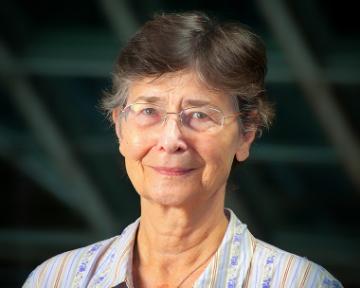
Walking alongside students as they move through the Order of Christian Initiation of Adults (OCIA) is a gift and a privilege that I am fortunate to be a part of. It is not just a program to guide students through “class,” but a relationship built on trust, patience, and a willingness to enter into real questions. Accompaniment in this space requires openness and vulnerability from everyone involved. It is a reminder that faith is not something we hand over fully formed, but something that grows slowly in the lives of students who are searching.
College is a time of many firsts: being away from home for the first time, creating and managing your time, doing your laundry, and experiencing many other firsts. Students find themselves in new environments without the familiarity of home or their previous schools. It is also a time filled with deeper questions, like, Who am I? What is my purpose? In the middle of all that searching, OCIA becomes more than a class. It becomes a place where students can belong while they are still figuring things out.
Students often come in carrying a strong focus on achievement. Their days are shaped by classes, deadlines, and plans for the future. Through OCIA, there is a noticeable shift from achieving to receiving. Students begin to recognize that they are loved not because of what they accomplish, but because of who they are. They come to see themselves as remade in the image of God, and that realization changes how they approach their daily lives.
Students are not only looking for an emotional connection, a place to belong, but they also want to understand—the intellectual why matters just as much as the personal how. OCIA creates space for both. It helps students make sense of the Church while also inviting them to live differently, even amid very busy schedules.
Fernanda shared that she had always felt something was missing in her experience of church until she found a community centered on Christ. What stood out to her was that she did not have to do it alone. She built friendships and encountered the Church in a way that finally made sense. By the Easter Vigil, receiving the sacraments felt deeply personal and meaningful.
Monica described the experience as a beacon of hope in her life. She found support, guidance, and a sense of calm through the community she encountered. Her faith became something she could lean on, not just something she learned about.
Students often describe feeling lighter as they continue through the process. They face the same challenges, but with a different sense of grounding. What begins as a time of wandering slowly becomes a more intentional journey. To walk with them in that process is a privilege. It is an opportunity to witness how God is already at work in their lives and how that work continues to unfold in ways that give hope and increase faith not only to them, but also to those around them.
~ Chris Castaneda, SJ
OCIA | Class of 2026
Aileen Cardena - '28
Christian Compton - '28
Dante Darnell - '29
Fernanda Escamilla - '28
Gloria Hao - grad student - '26
Irandy Rodriguez-Cruz - '26
Isa Denolo - '29
Isabel Piccini - '29
Litzy Zaldivar - '26
Mason LaFreniere - law student - '28
Matsuko Estrada Nakamatsu
Monica Logan - grad student
Peter Miao - '28
Reinhardt Muljano - '27
Shuning Wang - law student '26
What does it mean to partner with a community? At Santa Clara University, that question is not just theoretical. It shows up in real relationships, in classrooms, and in community spaces like Abriendo Puertas and Caminos Al Bienestar (CAB). In speaking with faculty involved in this work, it became evident that meaningful partnership does not start with expertise, but with humility.
Abriendo Puertas
Abriendo Puertas provides iPad based tutoring in math and literacy for Pre-K to 2nd grade students in San Jose’s Greater Washington neighborhood, while also offering workshops for parents during each session. SCU students take on a dual role, serving as tutors for younger students while also mentoring high school students from the Latino College Preparatory Academy.
For Dr. Pedro Hernandez-Ramos, an associate professor of education and an emeritus faculty, has been involved with Abriendo Puertas for years, the impact of the program is easy to see, especially in the children.
“I know for a fact that children in this program really develop a great sense of self-confidence,” he shared.
Through small group tutoring and consistent relationships with SCU students, children are supported not only academically, but also socially. They gain confidence, build meaningful connections, and begin to feel seen in ways that go beyond the classroom. Partnering children with mentors outside of their families who are dedicated to supporting their growth has been shown to create a meaningful and lasting impact.
This impact extends beyond the students and tutors, reaching into the families involved in the program. For the many of the mothers involved in the program, Abriendo Puertas becomes a space to better understand a school system that can often feel unfamiliar and overwhelming. Many are navigating a completely different educational structure than the one they grew up with, and that adjustment is not always easy. Through conversation, shared experiences, and support, they begin to build confidence in advocating for their children.
SCU students take on a dual role, serving as tutors for younger students while also mentoring high school students from the Latino College Preparatory Academy.
For Dr. Hernandez-Ramos, the reasoning behind his involvement and the ultimate impact of the program was meaningful in a few different ways.
“I wasn’t coming here to teach them a class,” he said. “I was here to listen to them, to work with them, to be a resource, and to learn from them.”
That mindset reflects a larger shift in how community engagement is understood. It is not about showing up with all the answers, but about recognizing that knowledge already exists within the community.
Camino Al Bienestar (CAB)
The same idea shows up in Camino Al Bienestar (CAB), a “train-the trainer” initiative, equipping Promotra (lay Latino community members who provide basic health education in the community) and community members with culturally and linguistically relevant mental health strategies through workshops developed in partnerships within the community. Based at Sacred Heart Community Service, the program focuses on creating community wellness modules that reflect local needs.
Dr Jasmin Llamas, Department Chair and Associate Professor at SCU, works closely with graduate students who are training to become therapists. For her students, the experience is more than just academic. It is a chance to engage directly with the communities they hope to serve in the future.
“Their understanding of community engagement really blossoms,” Dr. Llamas explained.
But that kind of growth depends on how faculty choose to show up.
“You have to come in with so much humility,” she said. “The community knows the community best.”
Jasmin also spoke about the importance of being aware of the power dynamics that naturally exist between universities and communities. Even when the intention is to help, there is still a hierarchy that needs to be actively challenged. For her, that means stepping back, making sure the work is centered on the community members, and remembering “this isn’t mine.”
Instead, it is something built together, shaped by the needs, ideas, and leadership of the community.
Dr. Hernandez-Ramos and Dr. Llamas highlighted the same lessons in their own approach. Community engagement is not fast, and it is not always structured. It requires flexibility, patience, and willingness to let go of control. In the process, something more meaningful is created.
For Hernandez-Ramos, that has meant witnessing the resilience and strength of the families he works with, something he described as “nothing short of astounding.” For Llamas, it has meant building a project that continues to grow, from research to teaching to future partnerships.
“I want this to be a long-standing relationship that is evolving and growing to meet everybody’s needs,” she said.
At its core, this work is not just about programs and outcomes. It is about how people choose to show up for one another. When partnership is rooted in humility and mutual learning, it creates a space for trust, growth, and lasting impact on all sides.
~ Camila Perez '27